

During a Zoom call last week, someone raised a concern about their database not being as responsive or engaged as it used to be. They wanted to know if anyone else was experiencing similar issues with their database. This is a great question, and there’s definitely some truth to it.
Throughout my extensive career, I’ve come to understand that the foundation of building wealth is fundamentally rooted in the relationships we cultivate with the people who know us, particularly our past clients. These connections have always played a crucial role in fostering trust and loyalty, which are essential in navigating the complexities of the financial landscape. However, as the housing market continues to evolve and a wealth of information becomes readily available to everyone, it’s imperative that we adapt our approach to client interactions and relationship-building. The rapid pace of change brought about by technology and industry consolidation presents unique challenges. Relevance in our field is becoming increasingly elusive, making it essential for us to shift our focus and strategies. Consider the emotional response we might experience when a client of 20 years chooses to refinance with a different bank, or when a longtime neighbor, who has become a friend, decides to work with another agent to sell their home. Such situations can evoke feelings of anger, frustration, and bewilderment as we grapple with the questions of loyalty and the reasons behind their decisions. I believe we have all experienced those emotions and frustrations.
In this era of significant transformation, maintaining relevance means not only staying informed about market trends and technological advancements but also prioritizing genuine connections and understanding the needs of our clients. We must be proactive in nurturing these relationships, ensuring that our value proposition is clear and compelling. By doing so, we can better position ourselves to withstand the pressures of a changing landscape and continue to foster the trust and loyalty that are essential for long-term success. In today’s fast-paced and highly competitive marketplace, the dynamics of client relationships are undergoing significant changes. As options multiply and technology transforms communication, the traditional belief that clients value consistent follow-up and personal engagement is being challenged. Many of us find ourselves grappling with the reality that client loyalty is not as steadfast as once thought. This shift raises important questions about the nature of our interactions and the true value we provide in our communications. As we delve into these themes, it becomes clear that understanding the evolving expectations of clients is essential for fostering meaningful connections in an increasingly impersonal world.

The perception that clients genuinely care about follow-ups and ongoing communication is increasingly questionable. In reality, the market is saturated with options, leading to a disconnect where clients may not prioritize these interactions as much as we hope. This realization can be a hard pill to swallow, especially when we convince ourselves that our clients will remain loyal and engaged with us indefinitely. However, the truth is that client loyalty can be fleeting and is not guaranteed. Moreover, it’s striking how infrequently professionals in our lives—such as doctors and financial advisors—reach out to maintain a connection. The once common practice of follow-up has dwindled significantly, reflecting a broader trend where communication has become more transactional and less personal. The reliance on texting and email has further contributed to a sterile approach to communication. These methods often serve merely as a superficial acknowledgment of presence, with little depth or substance behind the interactions. When seeing a doctor these days you go to a website for the results and then your need to call your doctor to understand the results.
Effective communication hinges on the value we add to our conversations. In a data-driven world where understanding consumer behavior is key, it’s vital to prioritize the quality of interactions over sheer quantity. Clients are overwhelmed with information and options, so we must strive to build meaningful connections that extend beyond simple check-ins. This shift in perspective is crucial for demonstrating real value in our client relationships, allowing us to differentiate ourselves in a crowded marketplace.
There’s a wealth of real estate data available that can help us connect with various age groups interested in buying or selling property. Here are a few examples:
- Buy & Sell Opportunities: The average person stays in a home for 13.2 years.
- Downsizing Trends: Since 1965, 51% of homeowners aged 53 to 58 are downsizing, and 30% of adults aged 55 are either downsizing or opting to rent.
- First-Time Home Buyers: The median age for first-time buyers is 38.
- Repeat Buyers and Sellers: The median age of repeat buyers is 61, while the typical age of home sellers has reached 63, the highest on record.
Understanding these trends allows us to make more relevant calls to clients, as we can identify when they are statistically more likely to buy or sell based on their age group. This approach opens genuine opportunities, aligning our outreach with the natural tendencies indicated by the data. By analyzing and leveraging this data, you can tailor your approach to meet the distinct needs and preferences of different demographic segments. The data allows to identify trends within specific age groups, such as millennials, Gen X, and baby boomers. By segmenting potential buyers and sellers based on age, you can create personalized marketing campaigns. For instance, younger buyers may respond better to digital marketing and social media outreach, while older clients might appreciate traditional forms of communication and face-to-face interactions.
By understanding their motivations, preferences, and challenges statistically it allows us all to craft targeted marketing strategies that resonate with each group of our clients and future clients.
Have a great week!
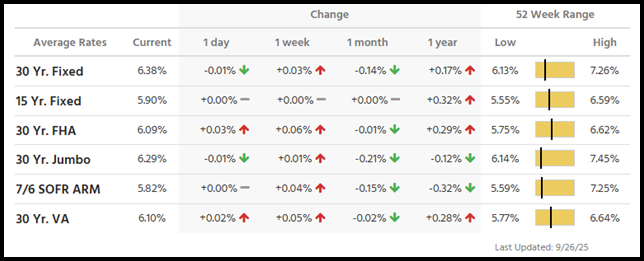
**New Mortgage Rate Trends—These rates are calculated from actual locked rates with consumers across 47% of all mortgage transactions nationwide, encompassing a combination of buyers who do not pay points and those who do. **